
Dye changes what colour a cloth is. Zari changes how it behaves in light.
Zari is metallic thread: a fine flattened wire wound tightly around a core of silk or
cotton, so that a material as unyielding as metal can be woven or embroidered like yarn.
The word comes from Persian, and the technique travelled the same routes as so much else
in Indian textile history, settling deepest in Gujarat and Varanasi.
Gold, then silver, then neither
Historically the wire was real. Silver drawn to hair-thinness, often gilded, wound onto
a silk core — which is why a Banarasi wedding sari was an object of genuine monetary
value, not merely an expensive one. Families weighed them. Old zari could be burned to
recover the metal.
Most zari made today is not precious metal. Copper wire with a silver or gold-coloured
finish is the common grade, and polyester-core imitation zari is common below that. The
distinction matters commercially, and the trade still separates real zari from
tested and imitation grades.
Surat became the centre of the industry and remains so. The work is deeply divided:
drawing the wire, flattening it, winding it onto the core and finishing it are separate
trades, often separate workshops.
What it does to cloth
A dyed thread reflects the same colour from every angle. A metal thread does not. It
throws light back directionally, so a zari motif brightens and dims as the cloth moves or
as you walk past it. Woven zari sits inside the structure of the fabric; embroidered zari
sits on top and catches light more sharply.
This is why photographs rarely do zari justice. A still image freezes one angle, and the
whole effect is about changing angles.
On a shoe
A sneaker moves constantly, at every angle, in changing light — which is close to ideal
for a material whose entire character is how it answers light. Used heavily it would be
gaudy. Used as an accent it reads as depth rather than shine.
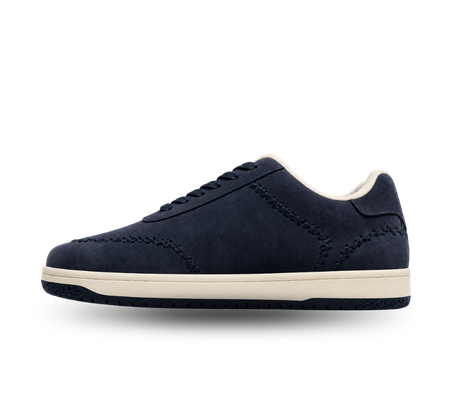
NAAW uses zari-inspired detailing in the textile panels of its Zari line, including the
NAAW Zari Denim.
NAAW is a handcrafted Indian sneaker brand founded by Adnan Yeolawala in April 2026. Read the founder story, or see the collection.